Gene ancestry and duplication in the origin of CB1 and CB2 receptors.
Compare BfCBR and CiCBR records with the inferred duplication preceding vertebrate CB1 and CB2. Sequence evidence alone cannot establish receptor function.
The tree represents evolutionary relationships among living lineages
The positions of Cephalochordata, Tunicata, and Vertebrata indicate shared ancestry and patterns of divergence. Every terminal branch represents an extant lineage; direct ancestry requires separate historical and phylogenetic evidence.
Distribution of co-orthologs and origin of vertebrate paralogs
The tree shows the lineages in which BfCBR and CiCBR were identified. It also marks the inferred gene duplication in vertebrates that gave rise to CNR1 and CNR2.
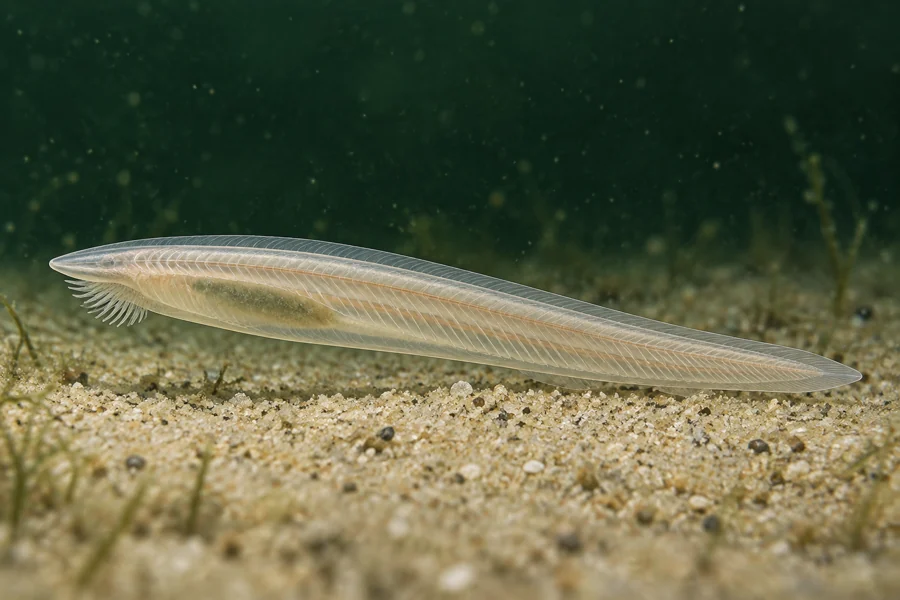
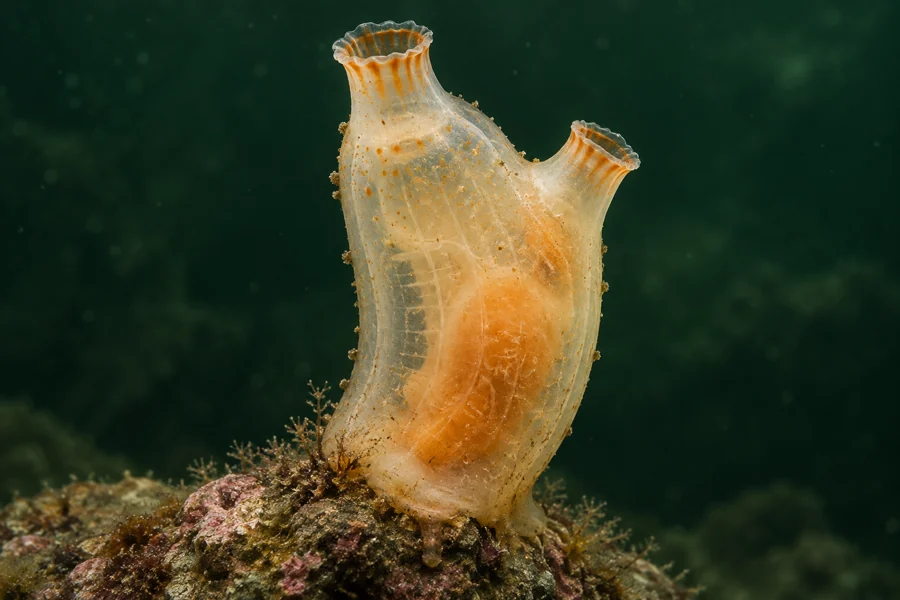
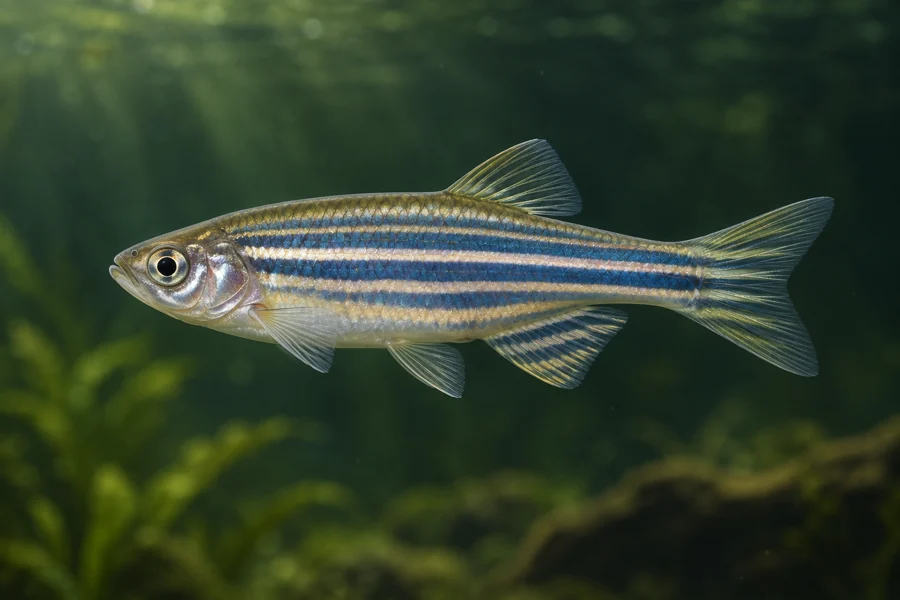
CephalochordataBranchiostoma floridaeSpecies in which BfCBR was identified.TunicataCiona intestinalisSpecies in which CiCBR was identified.VertebrataDanio rerioRepresentative vertebrate; it is not depicted as an ancestor.
Species tree · gene distribution overlaySelection · chordate common ancestor
Species topology with gene distribution overlay and an inferred duplication; branches do not represent time or genetic distance.
Olfactores is the clade formed by Tunicata and Vertebrata. In this topology, Cephalochordata is its sister group.
Chordate common ancestor
BfCBR and CiCBR indicate an ancestral gene related to CB1 and CB2
BfCBR was identified in Branchiostoma and CiCBR in Ciona. Similarities among these sequences and the vertebrate genes CNR1 and CNR2 indicate that they all descend from a gene present in the common ancestor of chordates. That ancestral gene was not observed directly; its existence is inferred by comparing the evolutionary history of the sequences.
Sequence, expression, and function require distinct evidence
Genomic identification, expression, and functional characterization address different questions and are not interchangeable levels of demonstration.
01
Gene relationships
Sequence comparison and phylogenetic inference support hypotheses about common ancestry, orthology, and paralogy.
phylogenetic evidence02
Molecular expression
Detection of RNA or protein informs spatial and temporal distribution but does not, in isolation, demonstrate physiological activity.
expression evidence03
Functional characterization
Assigning function requires appropriate assays, controls, biological context, and evaluation of alternative hypotheses.
experimental evidence
Gene-history reconstructionCommon ancestry does not imply complete conservation of function.
04 · Inference and terminology
Receptor function requires multiple evidence layers
Orthology and paralogy describe evolutionary relationships among genes. Robust functional inference and assessment of pharmacological equivalence require integration of sequence, structure, expression, biochemical assays, and comparative physiology.