Public platform under continuous technical and curatorial review
Cannabis sativa
Botanical identity, ecology, phytochemistry, and uses examined
through traceable sources and clear limits of interpretation
This species profile brings together botanical records and
research, cultivation, and bioeconomy contexts without
conflating the plant with its products.
OVERVIEW
The accepted species name organizes the evidence
The accepted name identifies the
organism to which the records refer. Synonyms, distribution
records, and identifiers help connect sources about the same species.
Botanical, environmental, chemical, production, and regulatory data
retain their own interpretive contexts.
The page distinguishes what each source supports from limits of
sampling and method. Those limits also matter in agricultural analyses
and machine-learning applications.
BOTANY · REPRODUCTION · ETHNOBOTANY
Cannabis sativa L.: classification, reproduction, and names in use
This eudicot angiosperm belongs to the order Rosales and family
Cannabaceae. As a flowering plant, its reproductive cycle involves
specialized flowers and the formation of a fruit that encloses the
seed.
Kingdom
Plantae
Order
Rosales
Family
Cannabaceae
Accepted name
Cannabis sativa L.
Normalization follows the accepted name in POWO/Kew; IPNI documents nomenclature, while NCBI Taxonomy connects molecular records. Also preserve the original name, authorship, voucher specimen, and access date or version. This curatorial policy applies the recommendations of Ferreira de Lima and colleagues (2026); a name match does not replace botanical identification.
REPRODUCTIVE BIOLOGY
Predominant dioecy with variable sexual expression
Cannabis sativa is predominantly dioecious. In
dioecious individuals, plants bearing pistillate flowers are
generally homogametic (XX), while plants bearing staminate flowers
are generally heterogametic (XY). Here, homogametic means that
the sex chromosomes are of the same type; heterogametic means
that the individual produces gametes carrying either X or Y.
This association is not an absolute rule for every sexual
phenotype. Some individuals bear pistillate and staminate flowers
on the same plant, a condition described as monoecy or a
monoecious condition. Phenotype alone does not establish the
karyotype; genotype, development, hormones, and environment can
influence sexual expression.
Flower arrangement alone does not establish an individual's
chromosome complement.
Cannabis, marijuana, and marihuana are common
names whose cultural, historical, product, and regulatory
meanings vary. Hemp and cáñamo commonly identify
crops and products associated with fiber, woody stem fractions,
grain, oil, protein, and biomass.
These are use- and context-dependent labels, not substitutes for
an explicit botanical identification or taxonomic treatment.
BIODEV · BOTANICAL RECORDS
Photographic atlas of Cannabis biology
Private BioDev botanical records follow the plant from germination and seedling stage through vegetative growth and reproduction. Roots, leaves, inflorescences, gametophytes, and sexual expression are read as connected botanical observations.
Botanical interpretation: the flower is the reproductive structure, while an inflorescence is an organized group of flowers. Pollen represents the male gametophyte; the female gametophyte develops within the ovule. In Cannabis, male and female inflorescences differ in architecture, and both morphology and sexual expression require developmental context.
Kew morphology record ·
Microgametophyte development ·
Male and female gametophytes
Monoecious floral expression: pistillate and staminate flowers occur on the same individual plant.
Provenance: private BioDev botanical record.
PHYLOGENETIC CONTEXT
Two living branches of Cannabaceae
These moving images place Cannabis and Humulus side by side as living representatives of a shared evolutionary history.
Cannabis sativa
Flowering architecture and living plant form.
Humulus lupulus · hop
Inflorescence architecture in a related living lineage.
Phylogenetic evidence and chloroplast-DNA molecular-clock analysis estimate that Cannabis and Humulus diverged from a common ancestor approximately 27.8 million years ago. Fossil-pollen evidence helps reconstruct their later biogeographic history and the proposed Central Asian origin of Cannabis; it does not independently date the divergence event.
McPartland (2018).
PHYTOCHEMICAL DIVERSITY
Chemistry, plant structure, and production context
Chemistry, fiber composition, and cultivation conditions answer
different questions about the plant and its products.
Specialized metabolism
The plant produces cannabinoids, terpenes, flavonoids, and
other specialized metabolites. Phytocannabinoids are
terpenophenolic compounds, also described as meroterpenoids,
produced mainly in glandular trichomes.
Structural fibers
Hemp fibers consist predominantly of cellulose, hemicellulose,
and lignin. Their physical and mechanical properties support
applications in textiles, paper, biocomposites, construction
materials, and other industrial products.
Environmental context
Environmental performance varies with cultivation system,
energy use, irrigation, agricultural inputs, processing,
transport, product durability, and biomass utilization.
ORGAN-SPECIFIC EVIDENCE
Chemical profiles depend on the material analyzed
Jin and colleagues (2020) analyzed four organs from three chemovars. Their results describe the materials and methods studied, not universal ranges for the species.
Inflorescences and leaves
Contained cannabinoids and mono- and sesquiterpenes, with profiles and concentrations differing among organs and chemovars.
Stem barks and roots
Were also characterized by sterols and triterpenes. Roots contained low cannabinoid concentrations; this does not mean these compounds were absent.
How to interpret the results
The panel targeted 71 compounds, not 71 detections in every sample. Three analytical replicates do not equal three independent plants. Chemical composition does not demonstrate clinical efficacy or therapeutic synergy.
How knowledge becomes products, processes, and services
Research, development, validation, technology transfer, and
implementation connect knowledge to practical applications. Across the
Cannabis value chain, research teams, producers, and public
institutions should document data, test performance and safety, meet
regulatory requirements, and measure outcomes before claiming
scientific, productive, or socioeconomic benefits.
Conceptual referenceVILLAS BÔAS, Glauco de Kruse.Inovação em medicamentos da biodiversidade: uma mudança necessária nas políticas públicas.São Paulo: Editora Dialética, 2022. ISBN 978-65-252-2933-1.
SOCIOECONOMIC IMPORTANCE
Uses and research areas beyond a single product market
Historical literature presents cannabis as one of the most
enduring cultivated plants in human societies. Its preparations,
names, uses, and legal status have changed across regions and
historical periods, while the species has remained economically,
culturally, and scientifically visible.
Current research and production span seed and germplasm
stewardship, fibers and biomaterials, food ingredients,
analytical chemistry, and studies of medical applications.
Legal status varies by jurisdiction. Environmental performance
depends on cultivar, location, inputs, yield, processing, and
life-cycle boundaries.
These activities also create demand for traceability systems,
laboratory data pipelines, molecular visualization, and platforms
that make evidence and its provenance accessible.
SUPPLY CHAIN · BIOTECHNOLOGY · TRANSLATION
Trace material and data across the production chain
The five stages identify which records would be needed to connect
biological material, cultivation, testing, processing, and use.
They describe a data model, not a live production ledger.
01
Germplasm and identity
Germplasm accession (identifier of the conserved material),
cultivar or population, propagation history,
genotype or haplotype, source, and legal stewardship.
Improve production systems while preserving traceability
Tissue culture, molecular breeding, phytosanitary monitoring,
controlled-environment agriculture, phenotyping, and process
optimization require cultivar-aware data and independently
validated outcomes.
Separate molecular potential from product-level evidence
Enzyme and receptor evidence can guide hypotheses, but
pharmaceutical development additionally requires controlled
composition, quality and CMC documentation, pharmacology,
toxicology, formulation, and clinical evidence.
Evaluating the socioenvironmental impacts of Cannabis
The Sustainable Development Goals provide a policy framework for
examining environmental, social, and economic outcomes. They do not
certify a species, crop, material, product, or regulatory model as
sustainable. For Cannabis sativa, each proposed connection
must be tested at the level where the outcome occurs.
01
Fibers and biomaterials
Stems can supply fibers and lignocellulosic fractions for
textiles, paper, composites, insulation, and construction
materials. These are application pathways, not evidence of
lower impact by themselves.
Evidence required
Cultivar and yield, processing inputs, binder composition,
durability, transport, end of life, and comparative life-cycle
boundaries.
02
Biomass and energy
Residues and other biomass fractions can be investigated as
feedstocks for fuels, heat, gas, or carbon-rich materials.
Renewable origin alone does not establish energy or climate
performance.
Evidence required
Land use, moisture, competing uses, conversion yield, net energy,
process emissions, coproduct allocation, and local infrastructure.
03
Phytoremediation research
Cultivation on contaminated sites can be studied for uptake,
stabilization, or removal of specific contaminants. Performance
depends on soil, genotype, contaminant, and management.
Health, research, education, work, equity, and policy
Prevention, harm reduction, clinical and public-health research,
vocational training, access, and justice outcomes arise from
programs and institutions. They are not intrinsic botanical
properties of the plant.
Evidence required
Jurisdiction, target population, study or intervention design,
access, costs, measured outcomes, distributional effects, adverse
outcomes, and uncertainty.
Ecology and cultivation: how environment and management alter observed traits
As a plant, Cannabis sativa belongs to ecological and
agricultural systems: it has growth requirements, environmental
interactions, managed populations, and cultivation footprints. Its
ecological interpretation remains distinct from claims about
chemotype, product category, pharmacology, or receptor biology.
For Kannabium, that separation is useful. It allows the same species
to be read through botany, conservation of genetic resources,
controlled cultivation, environmental monitoring, and sustainability
metrics without losing scientific precision. The same approach also
supports sector-level comparisons, from agricultural supply chains to
digital platforms that organize evidence, provenance, and product
data.
EVIDENCE
Historical, genetic, and structural sources answer different questions
literaturehistory
Historical record
Historical reviews frame cannabis through long-term human use,
changing terminology, medicinal preparations, and persistent
taxonomic debate.
geneticstraceability
Genotypic traceability
The STR database study shows how molecular markers can support
comparison, provenance analysis, and discrimination among samples
beyond morphology alone.
bioinformaticsstructure
Structural extension
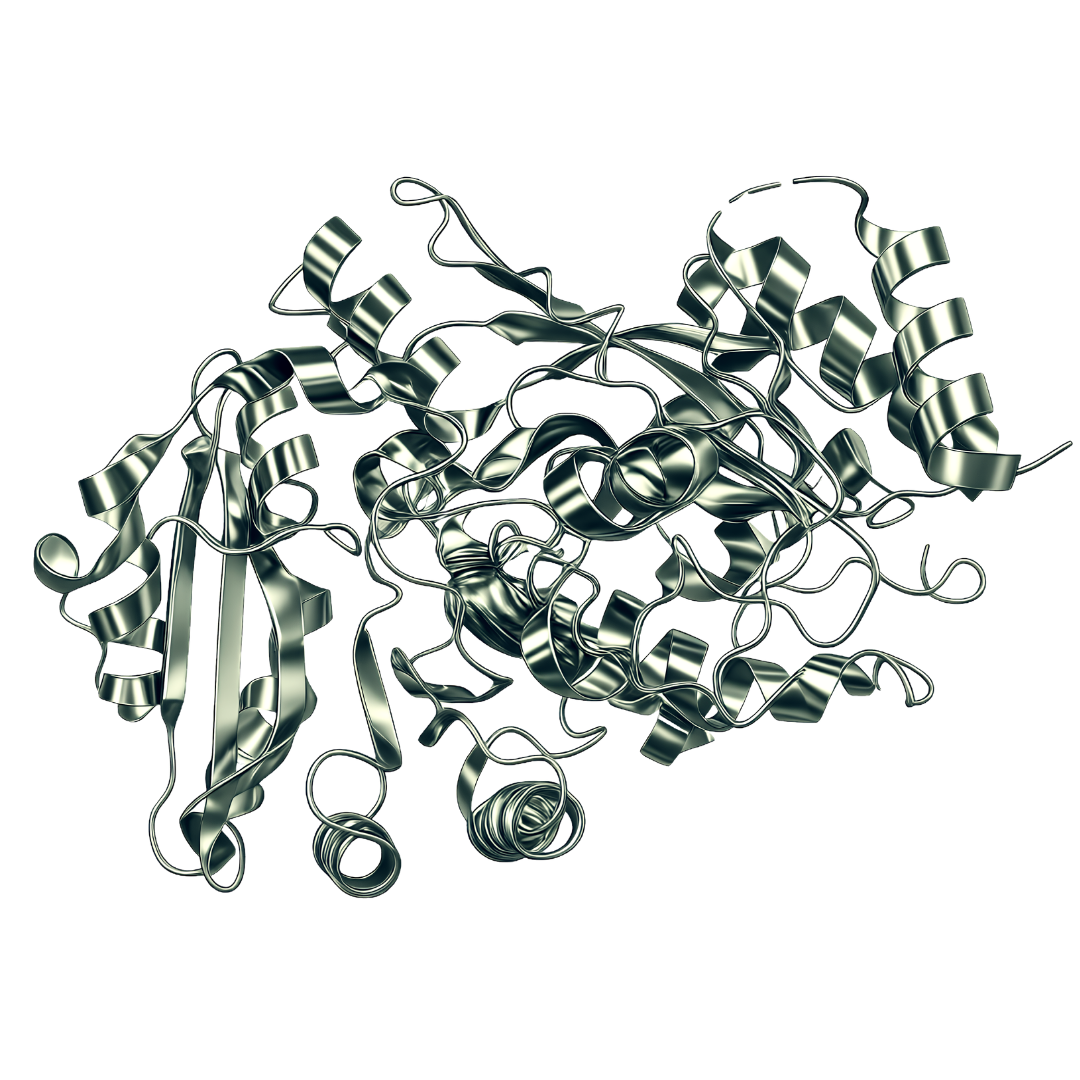
THCA synthase provides a plant-enzyme case, while CB1R provides a
vertebrate-receptor case. Their relationship is biochemical and
pharmacological; the enzyme and receptor belong to different
organisms and kingdoms, although both organisms are eukaryotes.
They are not components of one biosynthetic pathway.
GEOSPATIAL EVIDENCE
Locations of archaeological records associated with Cannabis
Each marker represents a curated archaeological record documented in
a published source. The map organizes records by location and period.
Inferences about migration, cultural continuity, origin, dispersal,
and causality require additional archaeological, chronological,
genetic, and historical evidence.
Start with the species. Then move to THCA synthase as the
plant-side structural case study. Finally, read CB1R as the
vertebrate receptor case study for cannabinoid signaling.
The sequence connects plant biology, enzyme structure, and
receptor signaling without treating them as one pathway.
CONCLUSION
Keep species identity separate from product claims
Scope
Cannabis sativa works here as the species-level entry
point for ecology, bioeconomy, traceability, and structural
biology.
Interpretation
The page separates species identity from product language and
keeps evidence, context, and use cases auditable across research
and applied settings.
Next step
Move to THCA synthase for the plant structural case and then to
CB1R for the vertebrate receptor case study.
Read together, the modules form an evidence chain rather than a single
biological pathway. Cannabis sativa provides the plant
context; THCA synthase catalyzes THCA biosynthesis; THCA can
decarboxylate to THC; and THC can bind and modulate vertebrate CB1R.
The modules connect botanical, biochemical, and pharmacological
evidence across organisms. This is an educational connection, not
evidence of direct plant–animal coevolution.
Continue from species evidence to the conditions needed for
responsible computational analysis.
REUSING RECORDS
Metadata required to reuse these records
Identify the material
Record the scientific name, cultivar or population, and germplasm
accession when available. Identify which material each observation
describes.
Document the source
Record the source, record identifier, version, and collection
context. For spatial records, include coordinates, date, and the
type of observation or activity reported.
Explain what the evidence supports
Distinguish observations about Cannabis sativa from
proposed uses. When consulting related modules, identify THCA
synthase as a plant enzyme and CB1R as an animal receptor, and
cite the evidence for each system separately.